














 Effet 7 en 1
 Hygiène + calcaire
 Consommation d'eau des hôtels
 Études de cas









Blog
Facturation de l'eau : pourquoi votre lieu de résidence peut vous coûter des centaines d'euros de différence
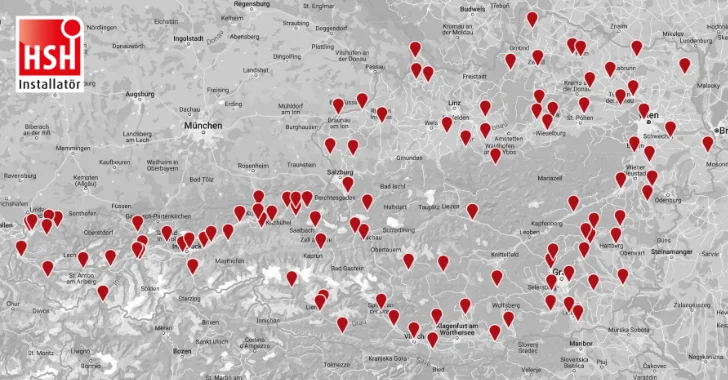
Frais d'eau ne sont en rien cohérentes d'une ville à l'autre. Selon l'endroit où vous vivez, un même foyer peut finir par payer plusieurs centaines d'euros de plus ou moins par an pour l'eau et les eaux usées – non pas parce qu'ils consomment plus d'eau, mais simplement à cause de leur code postal. Le Vorarlberg offre un exemple frappant, chiffres réels à l'appui, et c'est un bon point de départ pour se demander dans quelle mesure un ménage a réellement le contrôle sur ses propres coûts basés sur la consommation.
Entre la commune la plus chère et la moins chère dans notre exemple, il y a une différence de 683 € par an rien que pour les frais d'assainissement, alors que les deux villes ne sont distantes que de 62 kilomètres.
Dans quelle mesure les tarifs de l'eau varient-ils réellement d'une municipalité à l'autre ?
Cette pièce a été inspirée par un rapport de VOL.AT sur le parfois énormes différences sur les factures d'eau à travers les 96 municipalités du Vorarlberg. Le rapport met en évidence l'ampleur du fossé sans y mettre des chiffres exacts – nous avons donc calculé nos propres chiffres de comparaison pour combler ce vide.
Gaschurn contre Bregenz
Pour un foyer de quatre personnes, la différence est particulièrement marquée lorsqu'on compare un village de montagne à une ville :
| Municipalité | Redevance d'assainissement par an | Type de ménage |
|---|---|---|
| Gaschurn | €1,009 | Foyer de quatre personnes |
| Bregenz | €326 | Foyer de quatre personnes |
| Différence | 683 € par an | – |
Pourquoi le relief et la densité de population influencent-ils le prix ?
Une partie de cet écart s'explique par comment chaque municipalité est structurée. Gaschurn s'étend sur 177 kilomètres carrés avec environ 9 habitants par kilomètre carré. Bregenz, en revanche, s'étend sur un peu moins de 30 kilomètres carrés et compte 992 habitants au kilomètre carré. Dans une ville densément peuplée, le coût du réseau de canalisations et de la station d'épuration est réparti entre un nombre de foyers bien plus important que dans une commune alpine étendue.
Les Projet Tafamunt à Gaschurn montre à quel point la construction et l'entretien des infrastructures peuvent être coûteux en terrain montagneux : la stabilisation des pentes, les travaux sur paroi rocheuse et la construction de puits à eux seuls avaient été budgétisés à 800 000 €, sur un budget total de 2,5 millions d'euros consacré aux travaux d'adduction d'eau et d'assainissement. Ce type de coûts est pris en compte dans le calcul des redevances pendant plusieurs années, ce qui explique en partie pourquoi les communes situées sur des terrains accidentés ont tendance à appliquer des tarifs plus élevés que les villes de vallée à forte densité de population.
Lorsque les facturations rapportent plus que les coûts réels
Toute différence ne peut pas s'expliquer par les seuls coûts réels. Selon le rapport d'audit, certaines municipalités ont fait apparaître des lacunes en matière de transparence et de calcul légal des coûts, les revenus des taxes étant, dans certains cas, dits dépasser les dépenses réelles de plus de 200 pour cent. Ce chiffre doit être vérifié par rapport à la source exacte dans le rapport avant la publication.
Télécharger le rapport de la Cour des comptesCe que les ménages peuvent réellement influencer
En tant que foyer, il y a il n'y a rien à faire concernant l'abonnement une municipalité fixe. Le partie de la facture basée sur la consommation, en revanche, c'est une autre histoire – et avec de nombreux tarifs douaniers, cela représente une part importante du total.
Ce qui apparaît réellement sur une facture d'eau
Une facture d'eau municipale type se compose de plusieurs éléments :
- le prix du mètre cube d'eau douce
- les redevance d'assainissement par mètre cube
- un abonnement ou des frais de compteur, indépendamment de la consommation
- frais fixes ou suppléments éventuels
Seuls les articles basés sur la consommation – le le prix de l'eau et la redevance d'assainissement par mètre cube – réagir à une baisse de consommation. L'abonnement reste généralement le même, quelle que soit la quantité d'eau qui passe réellement par le compteur.
Comment calculer votre propre tarif
Il vaut la peine de prendre quelques minutes pour consulter une poignée de documents afin de donner un sens à votre propre facture :
- votre facture d'eau et d'assainissement la plus récente, indiquant la consommation en mètres cubes
- veuillez noter séparément les frais d'eau et d'assainissement
- enregistrer les frais fixes et les forfaits séparément
- consultez la grille tarifaire actuelle de votre municipalité, car les tarifs changent régulièrement
- utilisez ceci pour calculer le coût par mètre cube et votre facture annuelle totale
Les municipalités révisent leurs tarifs de temps à autre, de sorte qu'un tarif vieux de deux ans peut ne plus s'appliquer aujourd'hui.
Prendre une douche : le principal levier pour réduire la consommation d'eau
En dans la plupart des foyers, les douches représentent pour une grande partie de la consommation d'eau potable. Dans notre calcul modèle pour un foyer de quatre personnes, nous avons estimé à environ 120 000 litres, soit 120 mètres cubes, une année rien que pour cela. Puisqu'un mètre cube d'eau douce génère approximativement un mètre cube d'eaux usées, réduire l'utilisation de la douche a un double effet : cela réduit à la fois la facture d'eau douce et, lorsque les redevances sont basées sur la consommation, la redevance d'assainissement également.
Fixé par la municipalité
- l'abonnement, indépendamment de la consommation
- le prix du mètre cube d'eau et d'assainissement
- coûts d'investissement pour le réseau de canalisations et l'usine de traitement
- le modèle de calcul des coûts propre à la municipalité
Réduit à votre propre consommation
- les mètres cubes d'eau effectivement consommés
- la part de la redevance d'assainissement fondée sur la consommation
- l'énergie nécessaire pour chauffer l'eau
- la durée de la douche et le nombre de douches par personne
Exemple corrigé : 40 mètres cubes de moins par an
Pour notre ecoturbino® ET10L, nous travaillons sur la base d'un économie d'eau de 40 à 50 pour cent. À partir d'une référence de 120 mètres cubes d'eau de douche par an, cela représente une économie d'environ 40 mètres cubes d'eau douce – et, lorsque la facturation est basée sur la consommation, la même réduction d'eaux usées. S'ajoute à cela la baisse de la demande énergétique pour le chauffage de l'eau.
Appliqué à nos deux municipalités d'exemple, cela donne ce qui suit :
- Gaschurn : environ 180 € à 250 € d'économies de charges par an
- Bregenz ou la vallée du Rhin : environ 250 € à 400 € d'économies totales par an, y compris l'énergie pour le chauffage de l'eau
Ces chiffres sont un calcul de modèle basé sur les hypothèses énoncées ci-dessus. Pour un calcul adapté à votre propre situation, vous auriez besoin du prix local de l'eau et des eaux usées, de la source d'énergie utilisée, de la durée des douches et du nombre de personnes dans le foyer.
Comment l'ecoturbino® réduit la consommation d'eau de la douche
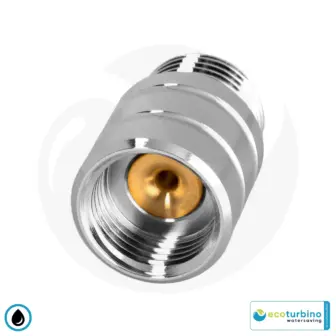
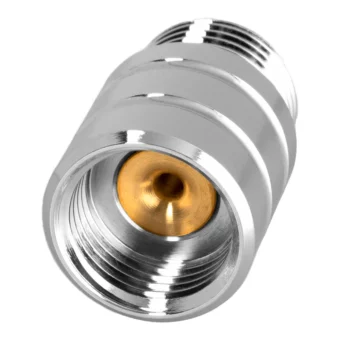
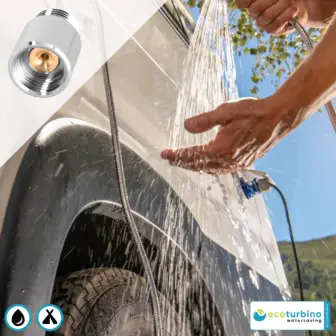
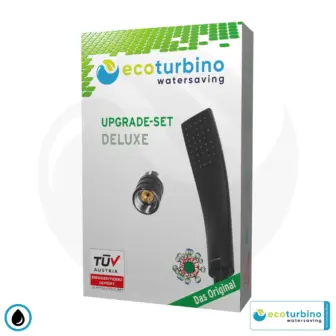
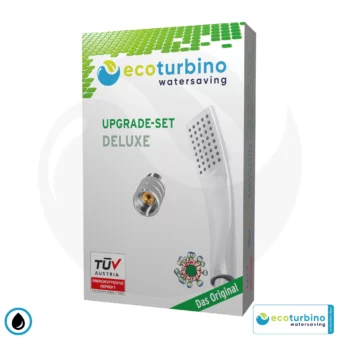
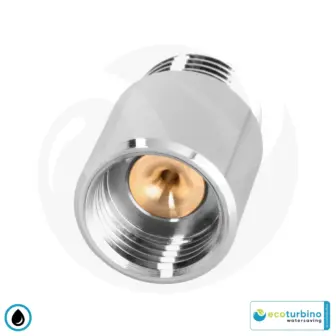
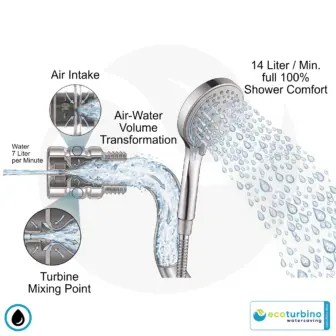
Les ecoturbino s'intercale entre le raccord de douche et le flexible de douche, aucun plombier n'est requis, en moins de cinq minutes. À l'intérieur, il mélange de l'air au jet d'eau grâce à un effet Venturi. Cela réduit la quantité d'eau qui s'écoule, tout en conservant le volume du jet et la sensation de douche auxquels vous vous attendez. L'économie de 40 à 50 pour cent est documentée en détail dans le Rapport du TÜV Autriche.
TÜV Autriche
Pour voir comment les coûts de l'eau et de l'énergie peut se dérouler différemment selon la région et le climat, jetez un œil à celui d'ecoturbino études de cas internationales, documenté dans divers pays et applications.
Coût d'achat et délai de retour sur investissement
La rapidité avec laquelle l'achat est rentabilisé dépend de vos tarifs locaux d'eau et d'assainissement, du prix de l'énergie, du nombre de personnes dans le foyer et des habitudes de douche réelles. Il n'y a pas de délai de retour sur investissement unique qui convienne à tout le monde, mais vous pouvez vous faire une idée approximative en comparant votre propre facture d'eau aux chiffres du modèle ci-dessus.
Économie d'eau @douche
Économies d'eau @sets
Économies d'eau @sets
Questions fréquemment posées
Les municipalités densément peuplées répartissent le coût du réseau de canalisations et de la station d'épuration sur un plus grand nombre de foyers, tandis que les municipalités alpines étalées font face à des travaux de construction et d'entretien plus coûteux. De plus, les municipalités calculent leurs redevances différemment et les revenus ne correspondent pas toujours précisément aux coûts réels.
En général, vous trouverez le prix du mètre cube d'eau, la redevance d'assainissement par mètre cube et un abonnement fixe qui ne dépend pas de la consommation. Certaines factures incluent également des frais de compteur ou des frais forfaitaires.
Dans notre calcul de modèle, la consommation d'eau de douche diminue de 36 à 40 pour cent. En partant de 120 mètres cubes par an pour un foyer de quatre personnes, cela représente environ 40 mètres cubes de moins par an.
L'ecoturbino mélange de l'air dans le flux d'eau grâce à un effet Venturi, de sorte que le volume du jet et la sensation de douche restent les mêmes tout en laissant passer moins d'eau.
Non. L'abonnement est fixé par la municipalité indépendamment de la consommation. Seule la partie liée à la consommation – le prix de l'eau et de l'assainissement par mètre cube – peut être influencée.